About the workshop
RAGE-KG explores the state of the art and goes beyond in integrating Retrieval-Augmented Generation (RAG) with Knowledge Graphs as well as the synergies between Large Language Models and the Linked Open Data ecosystem. We aim to foster innovative RAG architectures relying on Semantic Web standards and new approaches to make Linked Open Data usable by LLMs, enhancing their ability to generate reliable, verifiable and context-aware responses based on structured, decentralized and authoritative data sources.
Where
ISWC 2026 | Bari, Italy
When
October 26, 2026

Workshop Topics
Exploring the frontiers of Retrieval-Augmented Generation
RAG Architectures
- RAG architectures leveraging Knowledge Graphs, Semantic Web standards and Linked Data
- RAG design patterns including GraphRAG and AI Agents
- Evaluating RAG architectures with structured data
LLMs and Structured Data
- Training and fine-tuning LLMs with structured data
- Prompting Language Models with structured data
- Language Model-supported and ontology-supported SPARQL query generation
Innovative Approaches
- Neurosymbolic approaches for integrating Language Models with Linked Open Data, Semantic Web and Knowledge Graphs
- Use Cases, Work-In-Progress and, especially, Bold Proposals for RAG systems
Programme
Pitch roundtable: Participants can pitch their ideas in 2 minutes and discuss them with other attendees. To hold a pitch, send the title to daniel.dobriy@wu.ac.at.
Opening and Welcome
09:15-10:30 Applications
Enabling Knowledge Graph Understanding at Scale with the EXplore Your Graphs ENgine (EXYGEN)
Harshdeep Singh, Yurui Zhu, Giovanni Colavizza and Matteo Romanello
Prerequisite-Aware Curriculum-Graph Retrieval for Personalized Language Practice
Shuangding Xiong, Siyuan Kan, Jiawen Xu and Yves Lepage
Evaluating Knowledge Graph-Grounded Retrieval-Augmented Generation for Biomedical Question Answering: A Preliminary Analysis
Roberta Angioni, Sergio Consoli, Silvia M. Massa, Daniele Riboni and Diego Reforgiato Recupero
Towards a RAG, GraphRAG and MCP Implementation Over the EHRI-KG to Improve LLM Responses on Holocaust Archival Data
Herminio García-González, Xiao Xu and Mike Bryant
Graph-RAG, Retrieval-Augmented Generation (RAG), Argument Mining, Knowledge Graphs, Participatory Democracy
Michele Pagano Mariano, Rafael Angarita and Nicolas Maudet
Open Discussion
Coffee Break
11:10-12:50 Spotlight presentations
Assessing the Robustness of Knowledge Graph RAG Architectures in the Presence of Incorrect Data
Zachary Grider, Ajay Abburi and Alexander Nelson
StarGraph: Text-Preserving Meta-Path Indexes for RAG, Agents, and Tool-Grounded LLM Systems
Yuxin Yang, Bizhao Shi, Yuxuan Zhou, Jieran Zhang, Haoyang Wu, Tao Wang, Jia Yang, Hao Ma and Guojie Luo
MFG-AgentGraph: SHACL-Validated and PROV-O-Traceable LLM Agents for Manufacturing Anomaly Triage
Faizan Ali, Ameya Punekar and Juergen Bock
KR2: Knowledge-Enhanced Retrieval-Augmented Generation for Knowledge Graph Question Answering
Duygu Sezen Islakoglu, Melisachew Wudage Chekol and Yannis Velegrakis
A Two-Stage Pipeline for Knowledge Graph-Driven Business Strategy
Lucia Siciliani, Eleonora Ghizzota, Alex Jordan, Alessandro Petruzzelli, Giuseppe Spillo, Pierpaolo Basile, Davide Sola, Pasquale Lops, Giovanni Scarso Borioli and Giovanni Semeraro
Verifiable Retrieval for Legal Reasoning through Structure-driven Knowledge Graph
Ibrahim Siddig, Sviatoslav Tugeev and Munir Georges
Multilingual Wikidata-Based Assessment of Knowledge in Large Language Models
Daria Tupikina and Damien Nouvel
SAGE-QA: Neurosymbolic Support-Aware Graph Evidence Retrieval for Question Answering
Julie Loesch, Michel Dumontier and Remzi Celebi
Hybrid KG-RAG Question-Answering for Extreme Weather Events
Lorenzo Augello, Maxim Ionov and Jorge Gracia
Structured Agentic Retrieval over Knowledge Graphs with MCP and Query Containers
Simone Fassio, Dario Gosmar, Fanfu Wei, Thibault Ehrhart, Pasquale Lisena and Raphael Troncy
A GraphRAG system for reliable Question Answering on Forestry-Related Topics
Felipe Vargas-Rojas, Tsiory Fanomezana Randriamisaina, Damien Arvor and Isabelle Mougenot
Evaluating tool retrieval with policy compliance through knowledge graphs and language models
Zachary Grider and Alexander Nelson
Extending KGQA Benchmarks to Low-Resource Languages: The Udmurt QALD-9-plus and Multilingual DynBench Snapshots
Aleksandr Gashkov, Maria Eltsova and Andreas Both
Evaluating the Impact of Content Representations on Retrieval Performance in Wikibase RAG
Kolja Bailly, Lozana Rossenova and Ina Blümel
Open Discussion
Lunch Break
Keynote
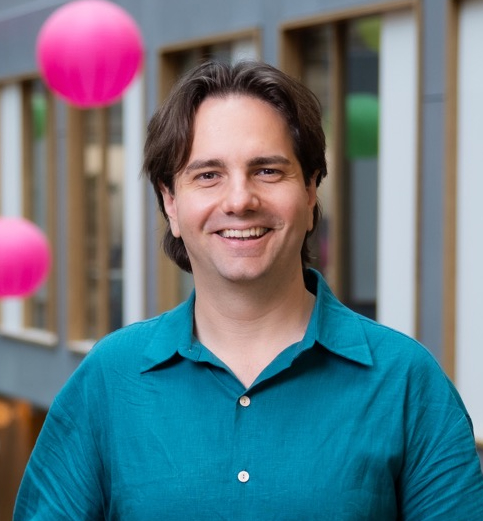
Filip Ilievski
Assistant Professor of Commonsense AI
Vrije Universiteit Amsterdam
14:55-15:40 Evaluation Approaches
Do Knowledge Graphs Influence LLMs in Entity Framing Analysis?
Luana Bulla, Beatrice Fiumanò, Nicolas Lazzari and Valentina Presutti
HERMES: Grounding Fidelity Evaluation in GraphRAG-Based Marine Knowledge Graphs Across LLM Configurations
Gustavo Nuñez, Marcos Zárate and Pablo Fillottrani
Grammar Bias: Neurosymbolic Embeddings for Directionally Robust KG-RAG
Victor Sotelo, André Regino and Julio Cesar Dos Reis
Coffee Break
Pitch roundtable
2-minute pitches and discussion
Closing Remarks
Important Dates
Short and full papers
- Papers due: July 24, 2026
- Acceptance notification to authors:
August 17, 2026August 21, 2026 - Camera-ready deadline: September 1, 2026
- Workshop date: October 26, 2026
(All deadlines are midnight Anywhere on Earth time)


Organizational Committee
The organisational committee comprises experts in the fields of neurosymbolic AI and Semantic Web.


Workshop venue
Bari, Italy, hosted at The Nicolaus Hotel Bari
The Nicolaus Hotel Bari
Via C.A. Ciasca 27, 70124 Bari, Italy
The Nicolaus is a full-service hotel and conference center in Bari’s Poggiofranco district.
- 15 modular meeting rooms and strong business facilities
- 174 guest rooms with Wi‑Fi throughout
- 5 on-site dining options plus wellness area and free bike sharing
We’ll confirm the exact workshop room closer to the conference dates.